31 Jan 2024 | Amazon, Wildlife
Deforestation, climate change, illegal hunting and environmental contamination are constant threats to the livelihoods and habitats of many species of Amazon animals that rely on the forests and ecosystems surrounding the Amazon River to survive and thrive.
The International Union for the Conservation of Nature (IUCN) based in Gland, Switzerland, is the world’s oldest and largest global environmental network bringing together governments, non-government organizations, United Nations agencies, companies and local communities to conduct scientific research, create policy and operate field projects which further wildlife protection and conservation. Each year, the IUCN publishes the IUCN Red List identifying threatened, vulnerable, endangered, and critically endangered species worldwide. The May 2013 Red List includes over 2,600 animals in South America with 118 of these located in Peru. Many of these threatened animals live in the Amazon Rainforest including the Giant Otter, South American Tapir, and Red Faced Uakari Monkey.

FOUR ENDANGERED AMAZON ANIMALS
1. The Giant Otter
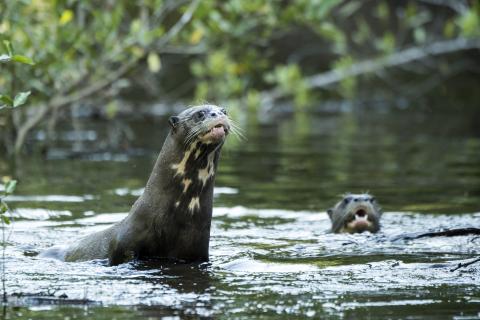
An Amazon icon, the giant otter (Pteronura brasiliensis) is the largest species within the weasel family (Mustelidae) and the most social. While rarely spotted in the northern Amazon, Giant Otters are one of the commonly encountered animals of the Amazonian Rainforest in areas such as Tambopata National Reserve and Manu National Park in southern Peru, where they feed on Amazon fish and crustaceans. Tragically, Giant Otter habitat destruction and illegal hunting continue to threaten this beautiful species and their numbers continue to decrease.
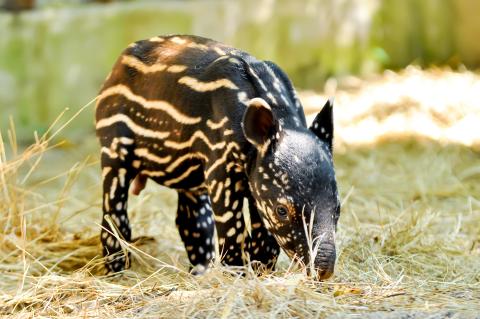
2. The South American Tapir
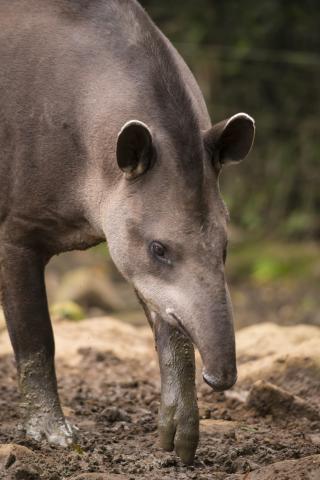
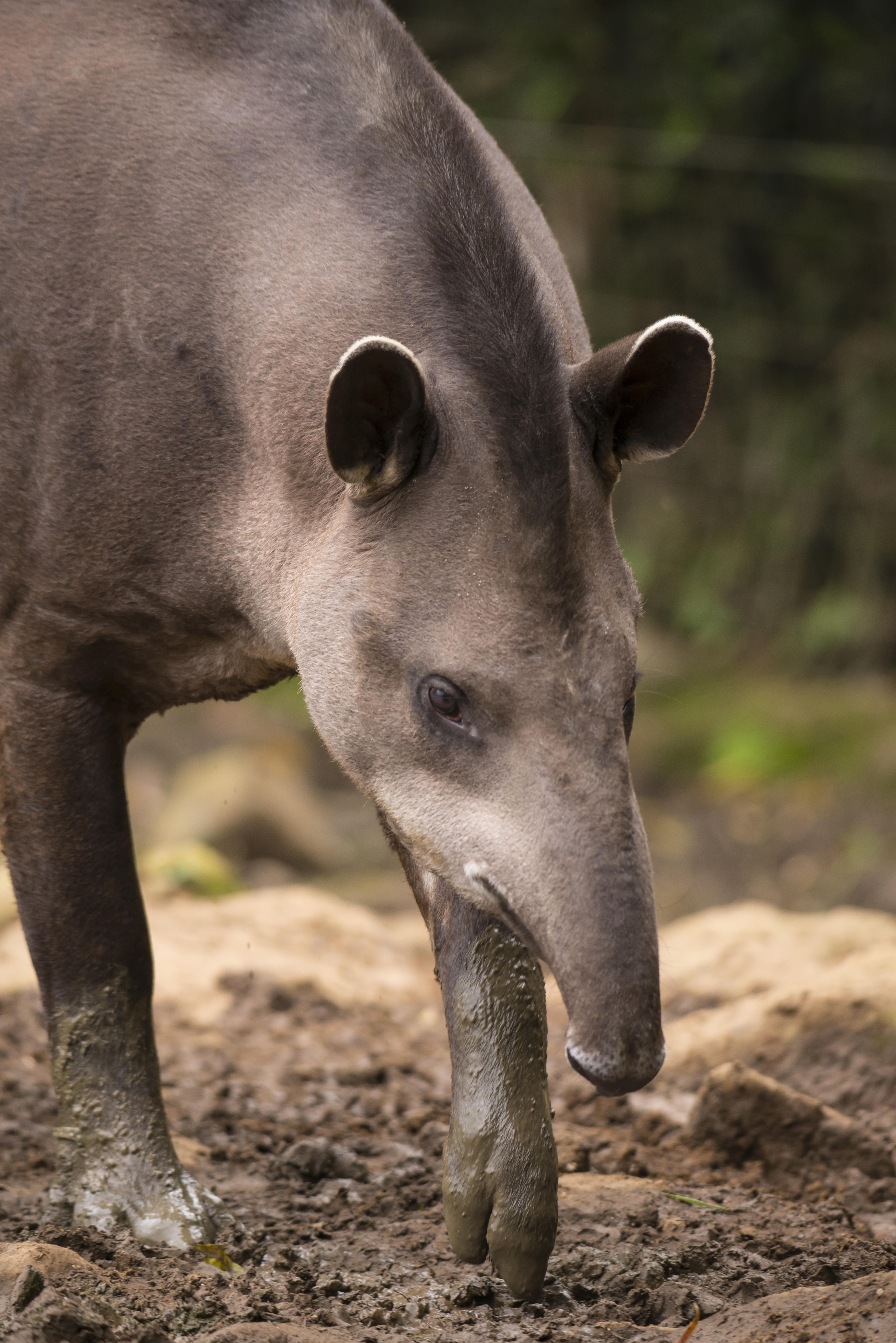
The South American Tapir (Tapirus terrestris), along with the giant otter and the jaguar, are considered the “big three” for travelers to see in South America. Tapir are hoofed mammals that inhabit the Amazonian forests of Peru, Brazil, and Bolivia. Despite their bulky appearance, tapirs are masters at moving, remarkably quickly, through impenetrable forest terrain. They have thick skin and feed off clay to obtain various essential minerals.
Due to local hunting of the animals of the amazonian rainforest, loss of habitat, and low reproductive rates, environmentalists have long been pushing for tapir preservation and conservation. The Greater Madidi-Tambopata Landscape Conservation Programme is currently working with the governments of Bolivia and Peru to better regulate the construction, logging, and excessive hunting that have reduced both existing populations as well as reproductive rates among lowland tapirs.
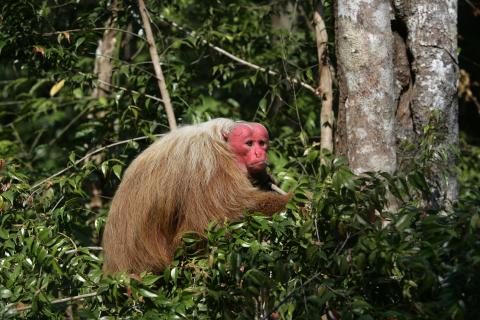
3. The Red-Faced Uakari
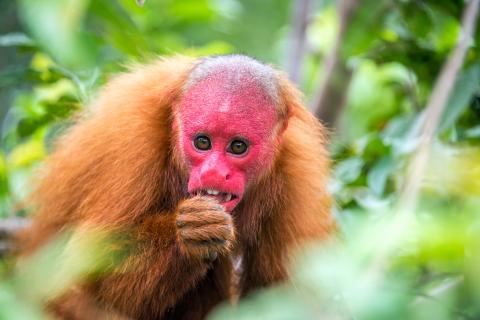
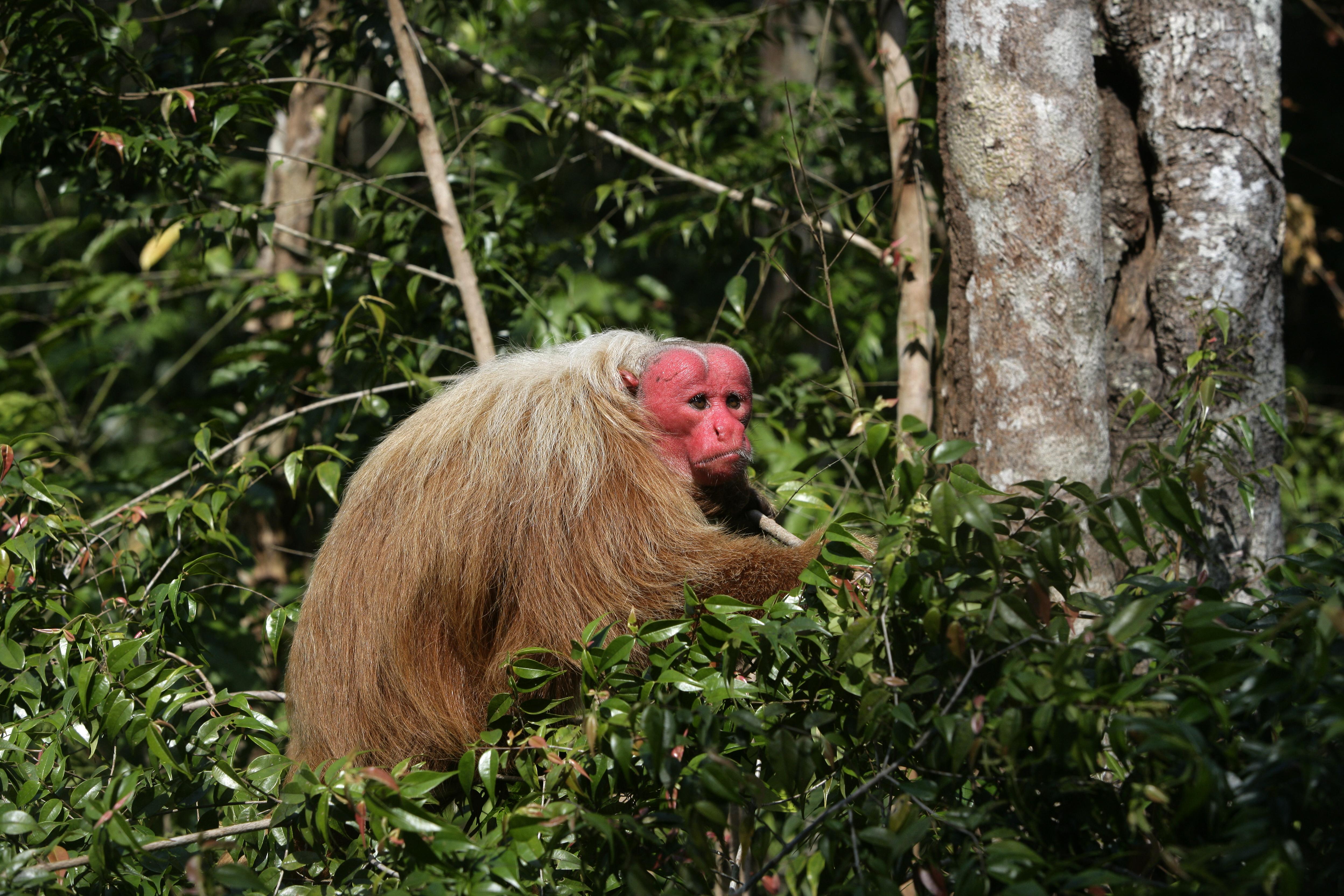
The red-faced Uakari (Cacajao calvus) is one of the most endangered monkeys in the Amazon Rainforest. The name ‘Uakari’ stems from an extinct tribe that inhabited the Amazon Rainforest many centuries ago. Habitat destruction and hunting continue to threaten this monkey and their numbers are ever-decreasing. However, efforts to protect the Uakari are widespread, in fact, the Tamshiyacu Tahuayo Reserve was established for this very purpose.
4. The Pygmy Sloth
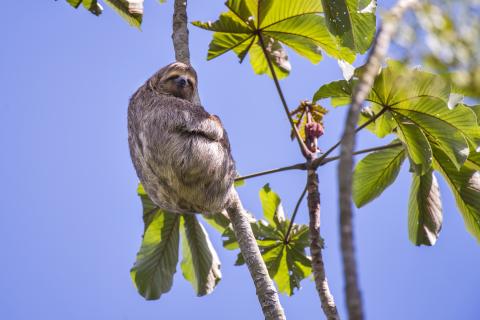
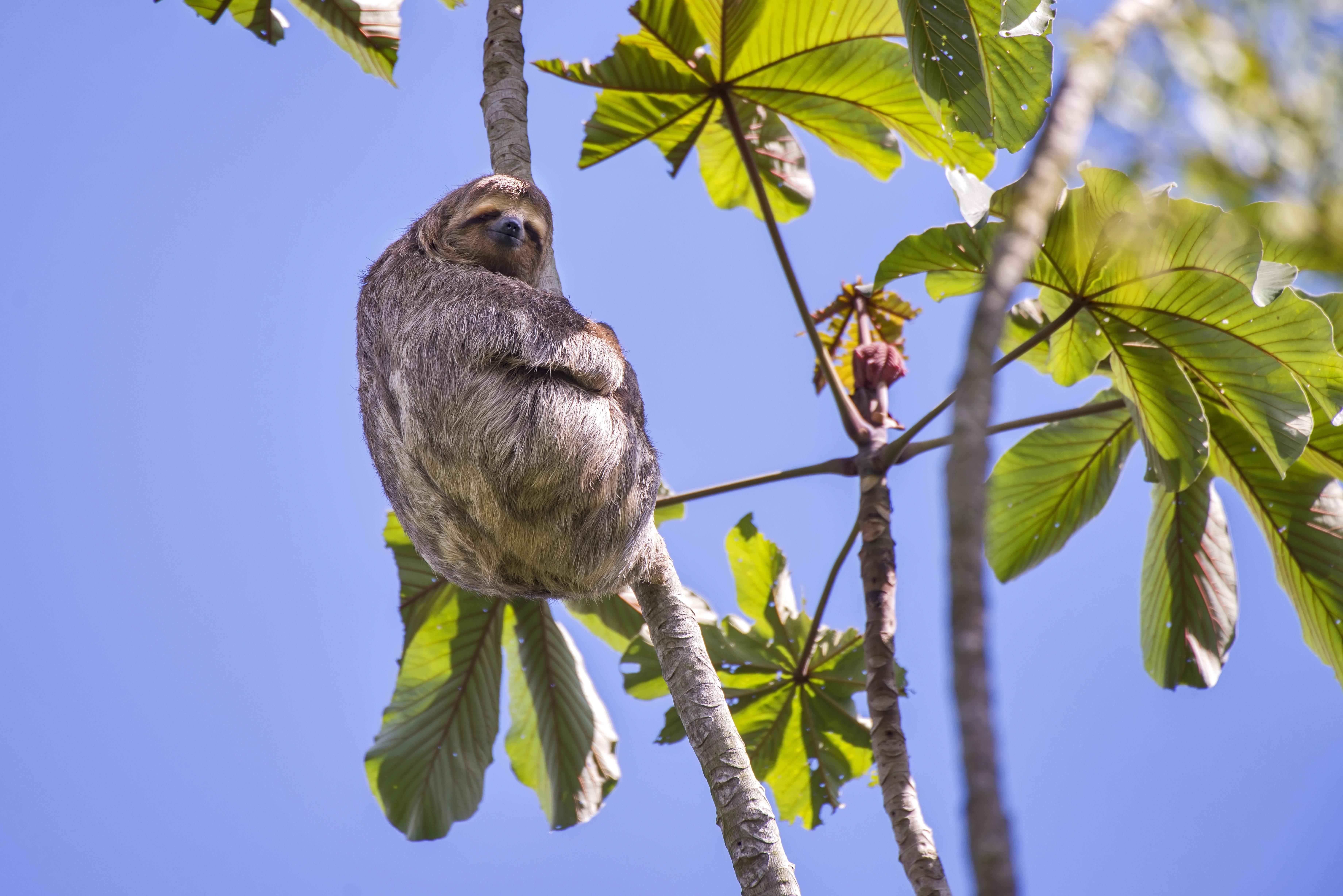
The Pygmy Sloth is becoming an endangered species. The main two reasons are their environment is being destroyed and they are being poached. The red mangrove trees are the home of the pygmy three toed sloth and they are being cut down which is putting pressure on the sloth population.
What countries does the Amazon rainforest cover?
The Amazon spans nine countries which are Peru, Colombia, Ecuador, Bolivia, Suriname, French Guiana, Guyana, Venezuela and of course Brazil. The Amazon Rainforest is a vast area of 2.1 million square miles found within the Amazon Basin which is 2.7 million square miles.
Why is the Amazon rainforest becoming endangered?
The Amazon River is an amazing biodiverse area with many unique species of plants and animals. It is under threat because of many factors including climate change, habitat destruction, deforestation and hunting. Unfortunately, this is just a snapshot of the hundreds of threatened species of Amazon wildlife.
Continued efforts to enforce wildlife conservation protections are of paramount importance if we are to sustain the natural Amazon habitats we see on our cruises at Aqua Expeditions.
Our team at Aqua Expeditions continues to be committed to sustainable management of natural resources in the Amazon. For more information about our support of specific environmental conservation and wildlife preservation projects, read about the recent release of the River Manatees on Wild Earth Day and our ongoing efforts to restore populations of Taricaya Turtles in the Pacaya Samiria Reserve.
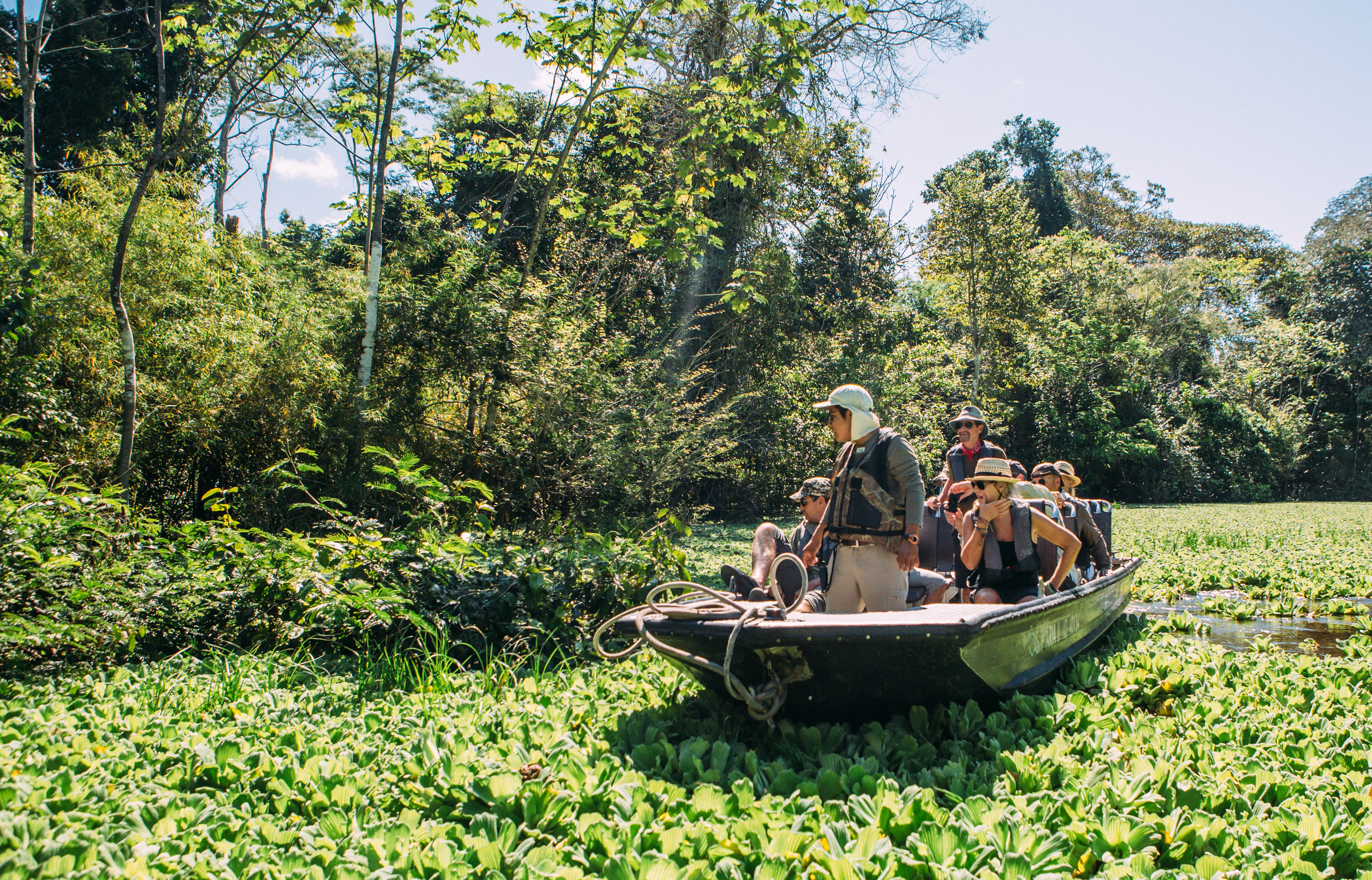
Sail with Aqua Expeditions and encounter these endangered animals and more in this ecologically unique part of the world. Contact our expedition consultants to plan your trip today.