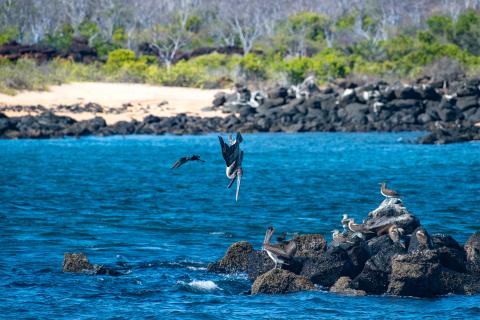
More than 9,000 different species of flora and fauna populate the Galapagos Islands. Among these are remarkable creatures found nowhere else in the world – giant tortoises with life spans of 150 years, some of the only penguins found north of the equator, iguanas that have learned how to swim, and a bird that lost its ability to fly. It is no wonder these enchanting islands are famously referred to as a “living laboratory of evolution”.
Due to the lack of predators in the region, the animals and birds of the Galapagos do not feel threatened by humans. This lack of a defensive instinct makes it possible to approach and observe them up close – while still maintaining the safe distance required by the National Park, of course. Every island you visit on your Aqua Mare voyage will present magical encounters with exotic life forms. Here are a few visits to look forward to:
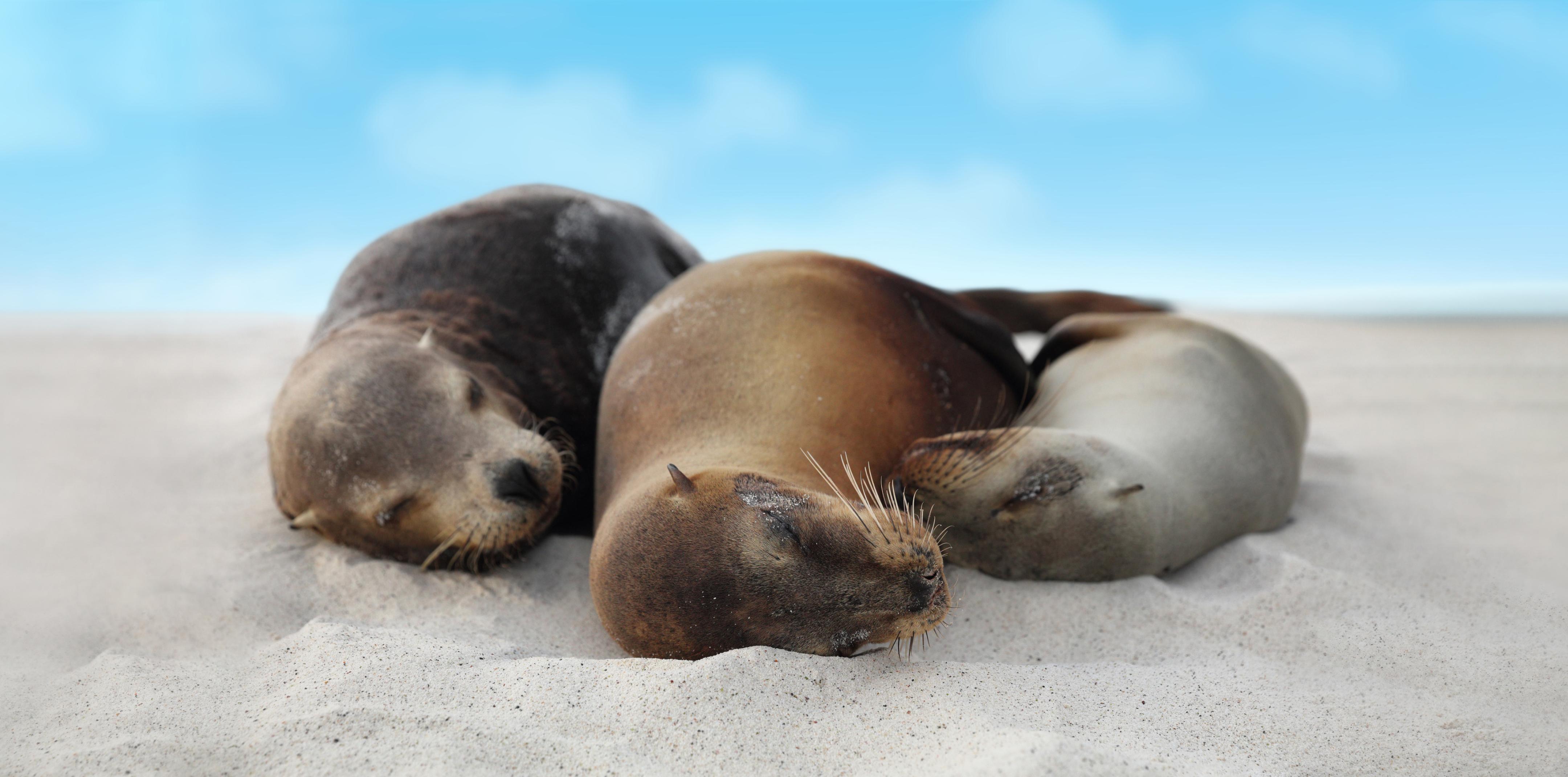
- Suarez Point: Chance to see a large colony of waved albatrosses, an extremely rare bird species only seen on Española Island. The trail also includes sightings of sea lions, nesting colonies of blue-footed boobies and Nazca boobies, and red- and green-colored marine iguanas.
- South Plaza: A small island where visitors can walk through colorful Galapagos carpetweed and giant Opuntia cacti, as well as spot beautiful seabirds such as the endemic swallow-tailed gull. This is the only place in the world where hybrid iguanas can be found – the result of crossbreeding between a male marine iguana and female land iguana.
- Cerro Dragon (Dragon Hill): Home to a robust population of land iguanas, where guests will also come across arid zone vegetation such as cacti and Palo Santo trees and might be able to spot flamingoes at a hidden saltwater lagoon.
- El Chato Giant Tortoise Reserve: Amazing encounters with giant tortoises in their natural habitat, as well as Darwin’s finches and short-eared owls in a beautiful area of pastures and Scalesia forests.