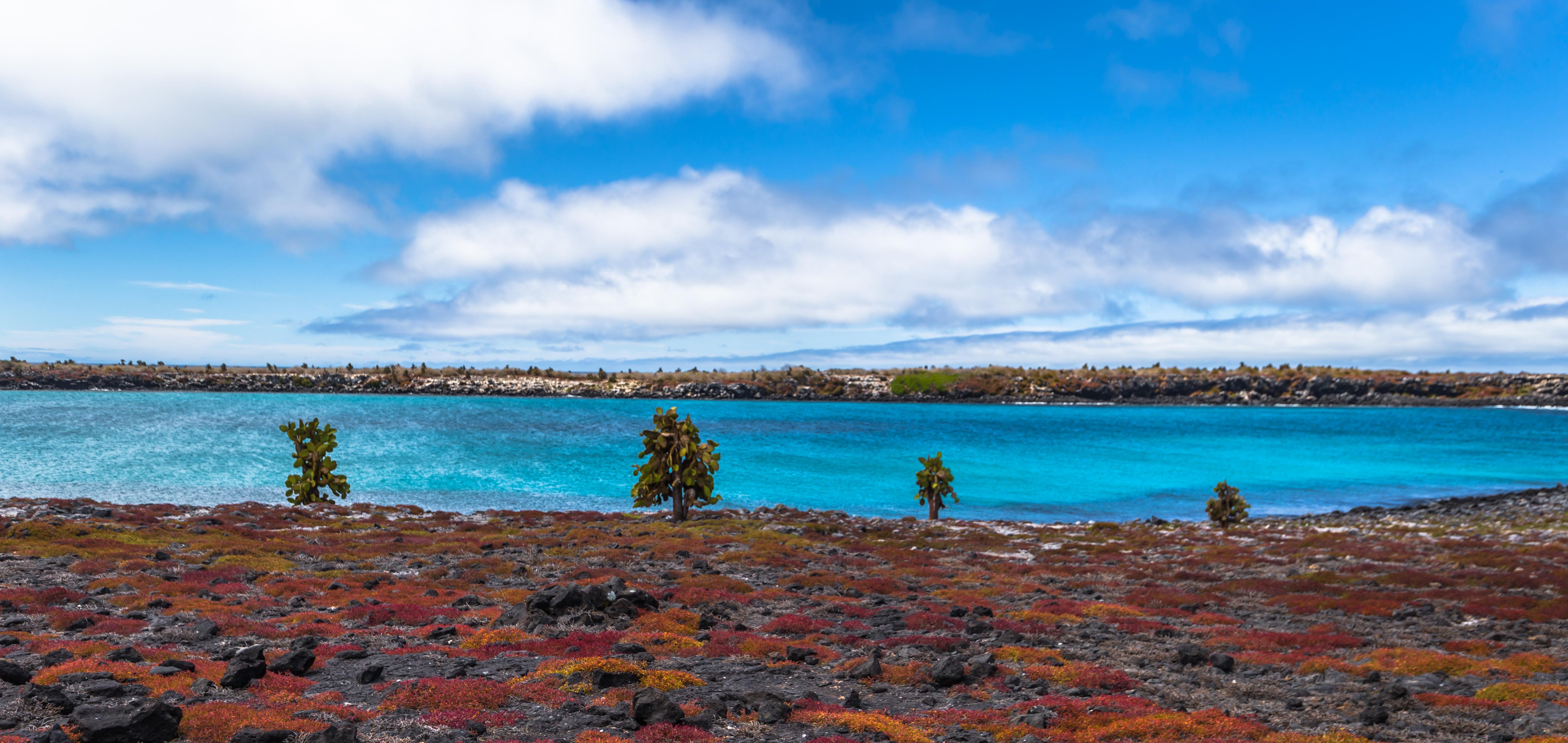
The weather in the Galapagos Islands is fairly moderate with average temperatures ranging between 69°- 84°F (21°- 30°C). This is because of the influence of ocean currents which are responsible for creating its two distinctive seasons: the wet season and dry season. Overall rainfall levels in the Galapagos Islands are quite low, resulting in predominantly arid zones in the lowlands near the shore. On the other hand, mist enables lush green vegetation to flourish in the highlands of larger islands.
Wet/Warm season
December to May marks the hottest season in the Galapagos archipelago, characterized by clear blue skies and plenty of sunshine. The predominant current during this period is the Panama Current, which brings warm waters to the archipelago, making it ideal for snorkeling. Heavy but short rain showers are frequent during the afternoons, transforming the landscapes with lush green vegetation.
Dry/Cooler season
June to November marks the cooler season in the Galapagos Islands, characterized by cloudier skies. During this period, southern trade winds are stronger, powering the effects of the colder Humboldt Current and Cromwell Current. The cold waters of the Humboldt current are responsible for the mist present during this season, particularly in the highlands. In fact, this season is locally known as ‘garua’, which is the Spanish word for mist. Although visibility is not as clear as the wet season, the waters are a lot more active and flushed with life as sea animals feed on the nutrients brought in by the cold currents.